

Sustainability · 2025
In this section48 topics
- Sustainability Policy2 items
- Sustainability Goals & UN SDGs3 items
- Policy Review2 items
- Business Value Chain1 item
- Stakeholder Analysis1 item
- Environmental Policy & Guidelines3 items
- Environmental Policy Review3 items
- Energy — Plan & Guidelines2 items
- Energy — Electricity Consumption1 item
- Energy — Fuel Consumption1 item
- Energy — Targets2 items
- Energy — Performance & Outcomes2 items
- Water — Plan & Guidelines2 items
- Water — Withdrawal, Discharge & Consumption1 item
- Water — Targets2 items
- Water — Performance & Outcomes2 items
- Waste — Plan & Guidelines2 items
- Waste — Generation, Disposal & Recycling1 item
- Waste — Targets2 items
- Waste — Performance & Outcomes2 items
- GHG — Plan & Guidelines2 items
- GHG — Emissions1 item
- GHG — Emissions Verification1 item
- GHG — Principles & Standards1 item
- GHG — Targets1 item
- GHG Targets — Other Targets1 item
- GHG — Performance & Outcomes2 items
- Environmental Legal Incidents1 item
- Social Policy & Guidelines3 items
- Social Policy Review1 item
- Human Rights Due Diligence2 items
- Employees — Plan & Guidelines3 items
- Employees — Workforce1 item
- Employees — Remuneration & Provident Fund1 item
- Employees — Training & Development1 item
- Employees — Occupational Health & Safety1 item
- Employees — Labour Relations2 items
- Employees — Employee Representation1 item
- Employees — Targets1 item
- Employees — Performance & Outcomes2 items
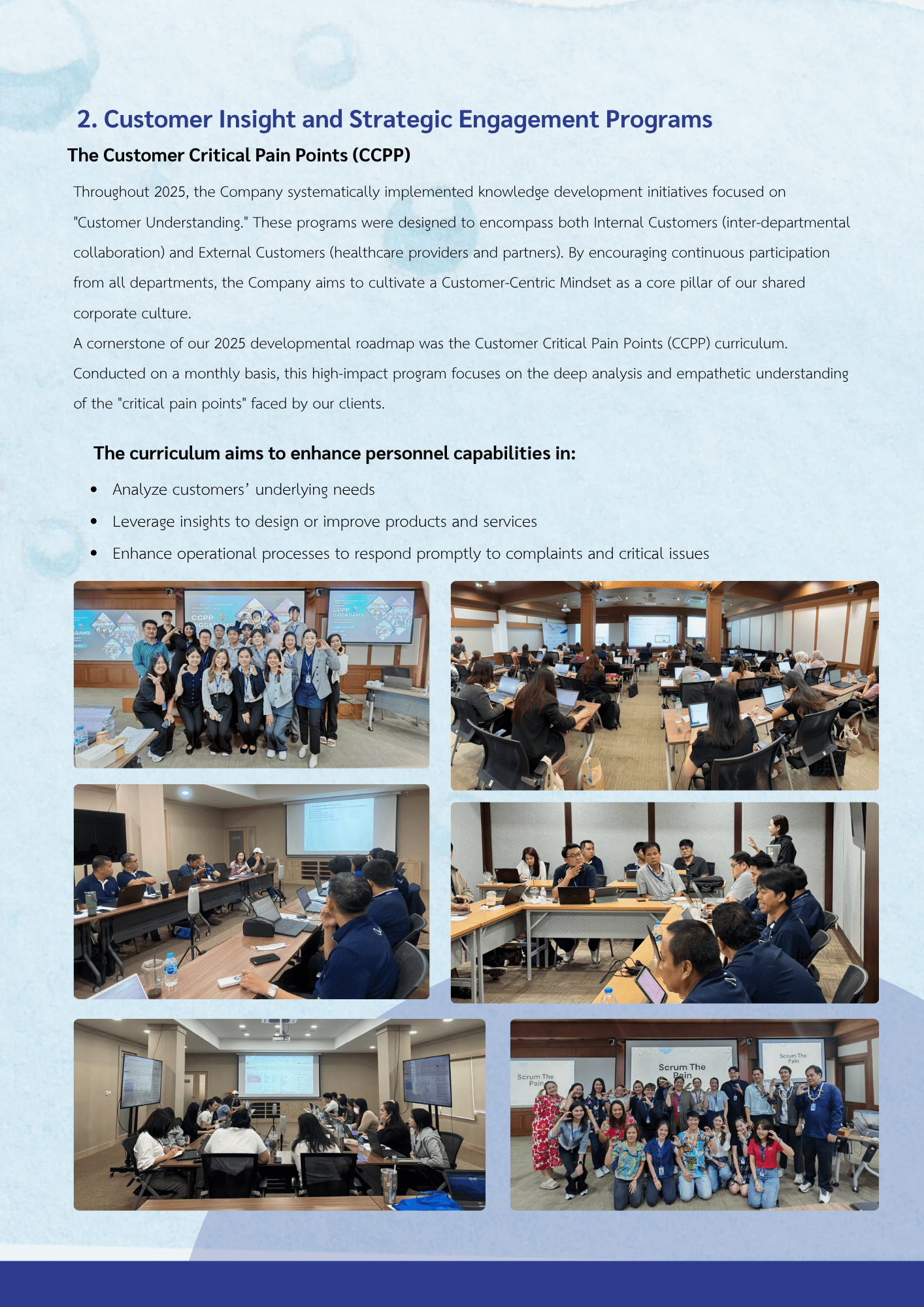
- Customers — Plan & Guidelines3 items
- Customers — Satisfaction Results1 item
- Customers — Targets2 items
- Customers — Performance & Outcomes2 items
- Community & Social — Plan & Guidelines3 items
- Community & Social — Targets1 item
- Community & Social — Performance & Outcomes2 items
- Law Violation Incidents1 item
Sustainability Policy
Has a Sustainability Policy
Yes
Policy Description
The Company operates under the vision “All people in Thailand with substantially happier, healthier and longer life - through the use of our globally curated advanced medical technologies.” The important intention is to be a part of raising the level of healthcare services in Thailand and take responsibility towards stakeholders by providing guidance on Environmental, Social, and Governance (ESG) initiatives in line with sustainable development framework. The company believes that the discovery and sale of new medical innovations and products must effectively meet the needs of all stakeholders, be safe for health, and be environmentally friendly.
Moreover, the Company is committed to contributing to a better and safer world for future generations. The Company is also dedicated to conducting its business fairly over the long term with all stakeholders. This commitment to social responsibility forms an integral part of the Company’s core business principles and has consistently guided its operations. Furthermore, the Company operates based on ethics and good corporate governance principles in accordance with the SET Sustainability Reporting Guide issued by the Stock Exchange of Thailand. As a result, the Company has been able to generate effective returns for shareholders while taking into consideration the impact of its business operations on all stakeholders.
Sustainability Goals & UN SDGs
Has Sustainability Goals
Yes
Goals Description
The Company places great importance on sustainable development by integrating ESG (Environmental, Social, and Governance) principles into its business operations. The Company strictly complies with all applicable laws, regulations, and regulatory requirements, and adheres to internationally recognized sustainability standards, including the nine Principles of the United Nations Global Compact (UNGC). In addition, the Company supports the United Nations Sustainable Development Goals (SDGs) by implementing structured management frameworks designed to maximize value for all stakeholder groups. This approach serves as a fundamental guideline for conducting business, with the objective of achieving a balanced integration of economic growth, social development, and environmental stewardship, thereby establishing a strong foundation for long-term sustainable growth.
The Company has established sustainability goals aligned with its business strategy, covering both short-term and long-term objectives, and addressing the following key areas:
- Environmental
The Company emphasizes efficient resource utilization and systematic waste management. It also promotes the use of renewable energy to reduce environmental impact and enhance long-term sustainability.
- Social
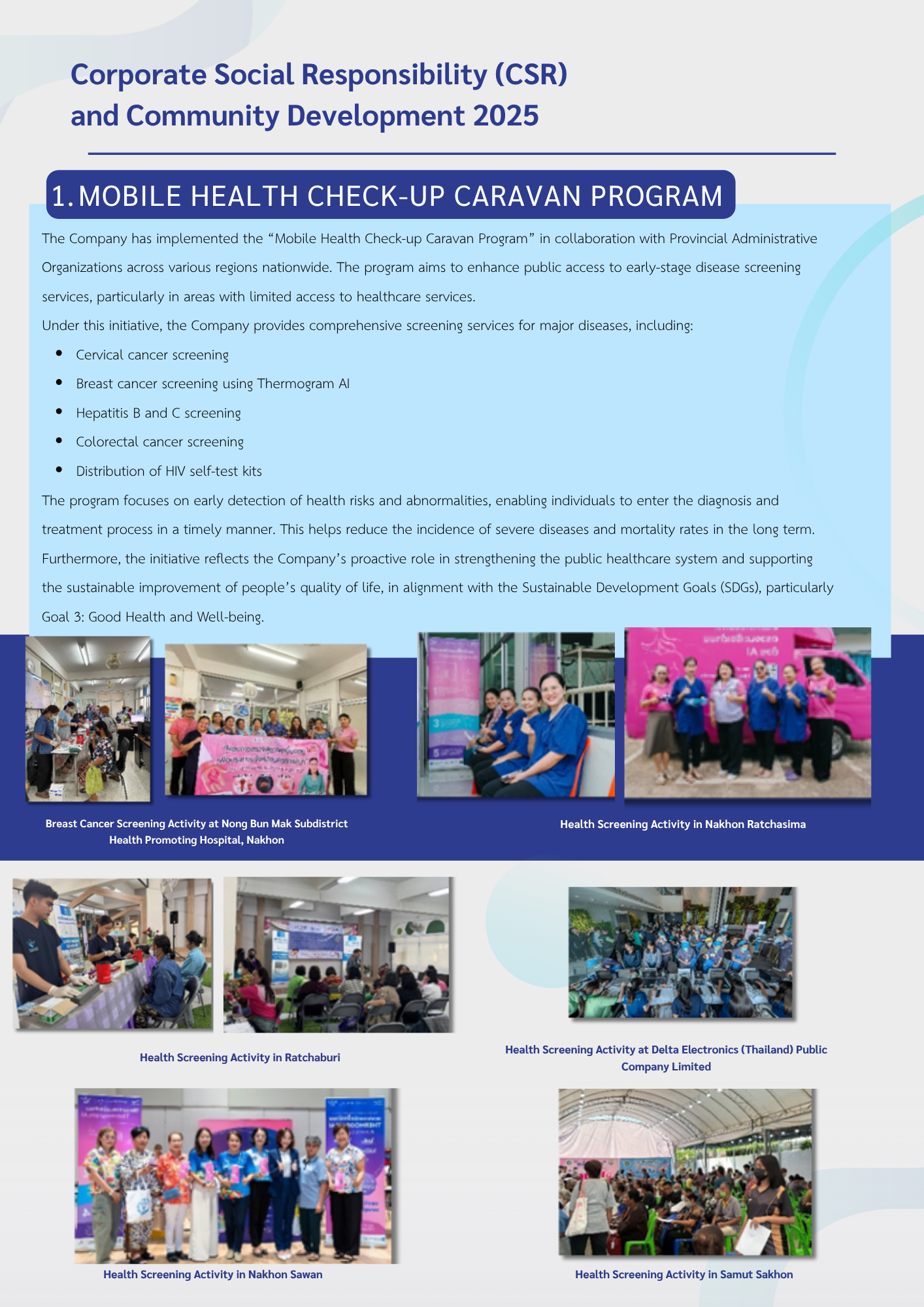
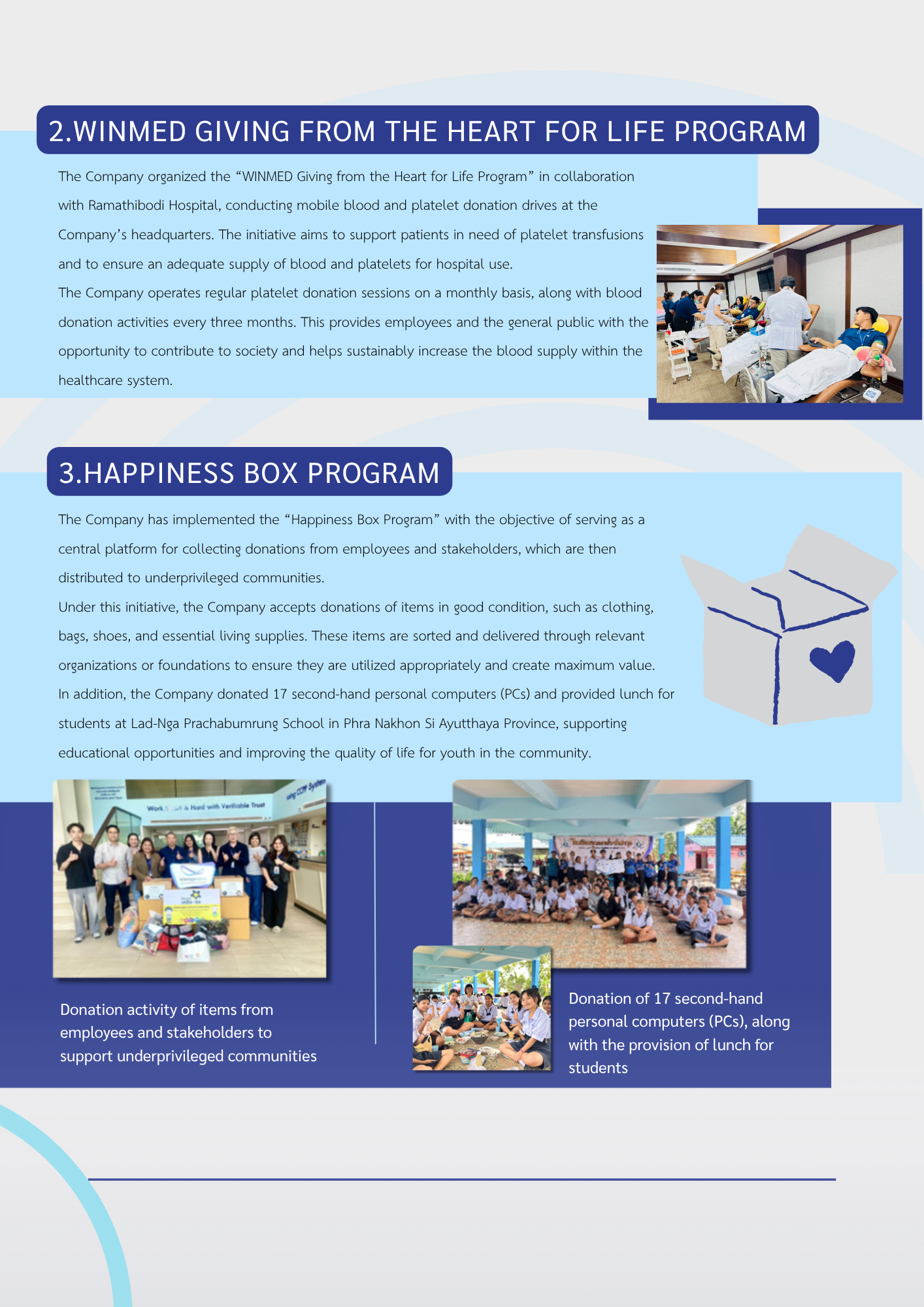
The Company supports initiatives to address blood and platelet shortages in Thailand through a mobile automated blood donation program. This initiative enhances convenience and accessibility for donors while strengthening the stability of the national blood reserve system. In addition, the Company supports cervical cancer screening programs and mobile health screening units to expand access to basic healthcare services and promote early disease detection, thereby improving public health and quality of life.
- Governance
The Company places strong emphasis on good corporate governance. Clear Corporate Governance principles have been established and are publicly disclosed on the Company’s website. Furthermore, the Company has implemented a comprehensive anti-corruption policy that strictly prohibits all forms of corruption, whether direct or indirect. The Company also provides whistleblowing channels to enable the reporting of misconduct or corruption-related violations.
UN Sustainable Development Goals
| SDG Goal |
|---|
| Goal 3 Good Health and Well-being |
| Goal 4 Quality Education |
| Goal 5 Gender Equality |
| Goal 8 Decent Work and Economic Growth |
| Goal 9 Industry, Innovation and Infrastructure |
| Goal 10 Reduce Inequalities |
| Goal 11 Sustainable Cities and Communities |
| Goal 12 Responsible Consumption and Production |
| Goal 16 Peace, Justice and Strong Institutions |
Policy Review
Policy Reviewed This Year
Yes
Policy Changed This Year
No
Business Value Chain
Value Chain Description
The Company’s primary business is to act as a mediator between medical product manufacturers from around the world and medical service providers in Thailand, whether it be public hospitals, private hospitals, or leading medical institutions in Thailand. This makes the company an important part of the medical service system in Thailand. With this in mind, the company must develop and manage the value chain of the company’s business in order to benefit stakeholders. Confidence that the company can respond to the needs of stakeholders in a manner consistent with expectations given to the company. The value chain of the company can be divided into five activities, with the following details:
The procurement of innovative medical products to meet customer needs, keep up with technology, and operate responsibly. (Provision) |
|
Being an expert in product delivery, warehouse management, and service provision. (Distribution) |
|
Being an expert in sales and marketing. (Accessibility) |
|
Clarity in communication, including advertising and responsible customer listening. (Engagement) |
|
(After-Sales Services) |
|
Sustainability material topics that align with corporate strategies and stakeholder expectations.
The Company believes that identifying and prioritizing sustainability is crucial for its business operations and stakeholders, positively and negatively, and has an impact on decision-making, operations, business performance, and the impact on stakeholders in the value chain.
Therefore, the company sets strategy and business plans to align with the expectations of all stakeholders, covering sustainable development goals both socially, economically, and environmentally, which align with the globally accepted sustainable development goals (SDGs). By analyzing and identifying critical stakeholders, the company considers key issues that align with their expectations and concerns, through a Materiality process or critical sustainability issues, to assess the priority of these issues.
Identification of issues and scope of impacts
The company identifies key issues that affect its business operations, recognizing business risks and opportunities covering all groups of stakeholders related to the business.
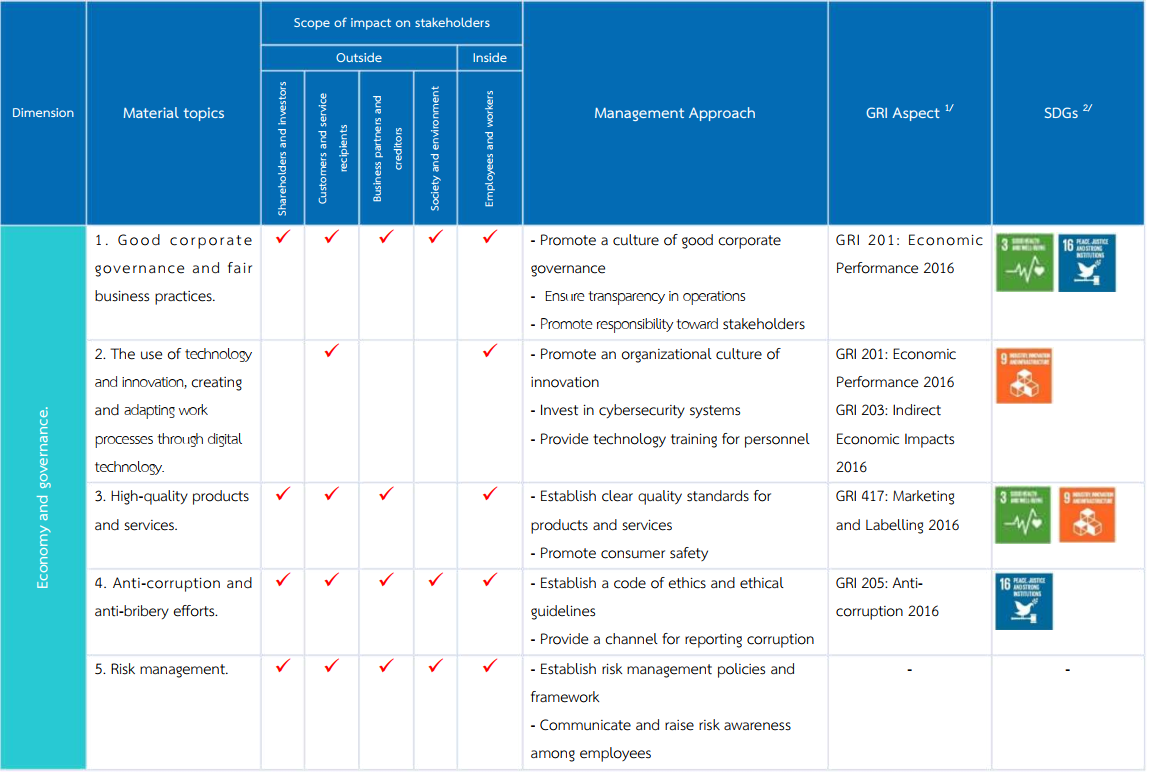
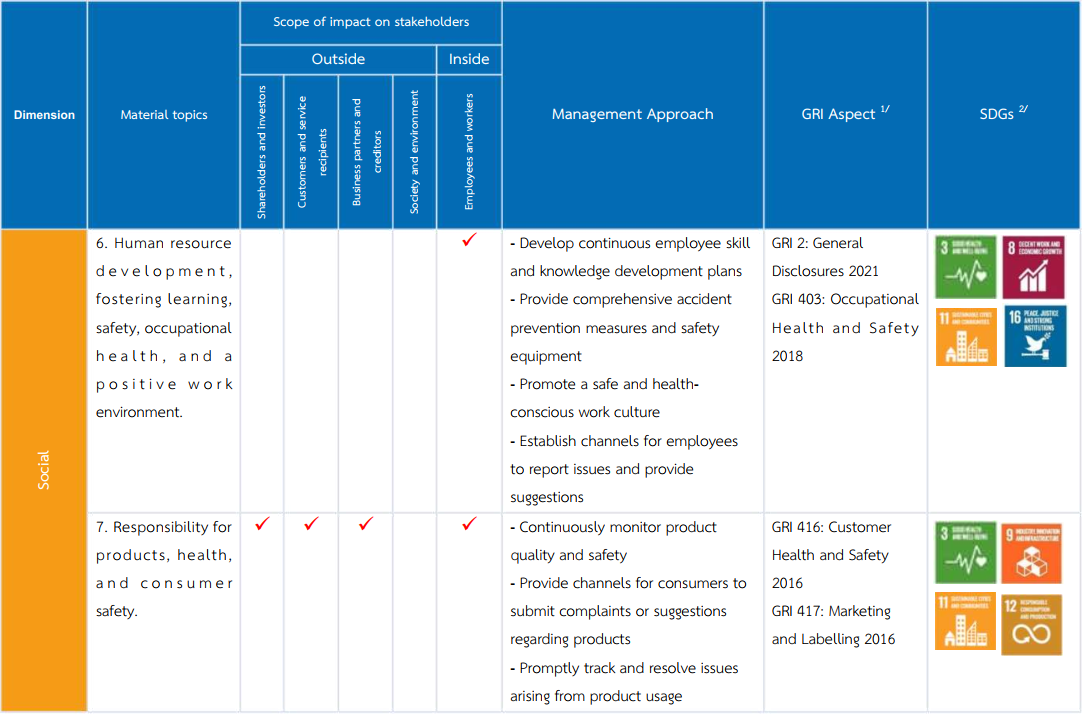
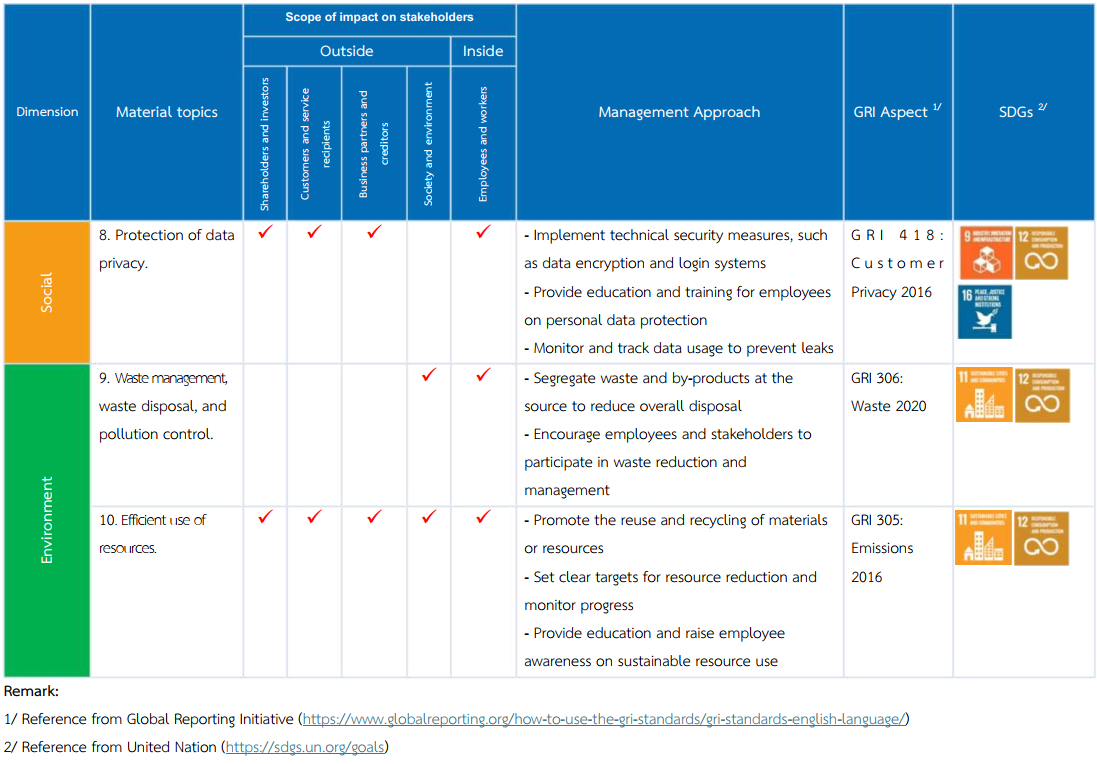
Issue prioritization
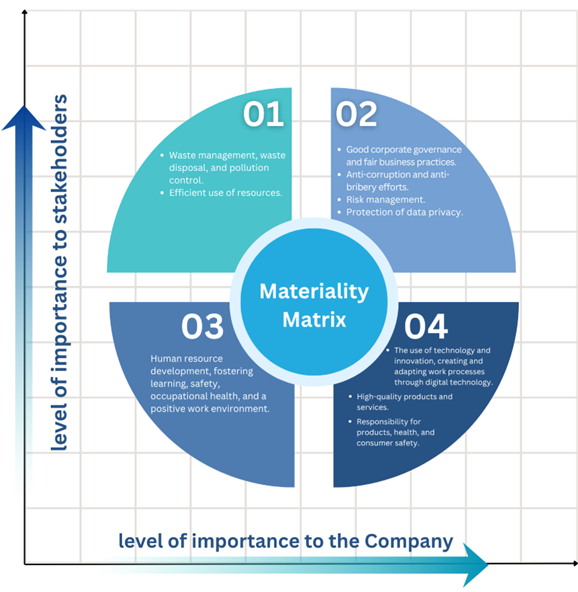
The Company analyzes the collected sustainability issues and prioritizes each issue in the Materiality Matrix, with the following criteria for prioritization consideration:
Horizontal axis Shows the importance of sustainability issues to the company by considering the impact on the company in terms of governance and economy, environment and society, and considering issues in the company’s business plan.
Vertical axis Demonstrates the importance of sustainability issues to stakeholders by considering the impact on decision-making and interest of stakeholders
Validation
The working committee presents important sustainability issues relevant to the business strategy for review by the company’s board of directors, in order to assess key issues. The considerations will include correctness, appropriateness, and consistency with reality.
Continuous review and development
The company prioritizes important sustainability issues that have been approved and defines the content of sustainable development in a consistent manner. The management of these important sustainability issues will cover the management direction and performance measurement as defined and will be reported annually to stakeholders.
The Company reviews data received from stakeholders regarding their vision, mission, business strategies both internally and externally, including risk and opportunities that may impact the business. The report, through 56-1 One Report, is also reviewed by readers for sustainability. The company considers the expectations, concerns, and feedback of stakeholders in order to continuously improve and develop important sustainability issues. By considering stakeholder expectations and feedback, the company identifies key sustainability issues and responds appropriately to each issue to meet the expectations of stakeholders.
Stakeholder Analysis
Stakeholder Analysis
| Stakeholder Type | Stakeholders | Stakeholder Expectations | Response to Expectations | Communication Activities |
|---|---|---|---|---|
| External stakeholders | 2894 · Description: Creditor · 2899 · Description: Suppliers · 2913 · Description: Shareholders · 2923 · Description: Customers · 2928 · Description: Society | - generate reasonable returns
- Operate with sustainability according to the principles of environmental and social responsibility under the principles of good corporate governance
- Regular disclosure of important company information
- Risk management to be ready for change and drive sustainable growth in the future
- Using innovative and high-quality medical products that are up-to-date and can effectively meet needs.
- Received consultation and support including maintenance system in case of usage issues.
- Get convenient, fast, accurate, standardized diagnostic laboratory services
- Protect confidential information and customer privacy.
- Expect fair and reasonable contracts.
- Select business partners with fairness and equality.
- The company must be able to comply with the contract terms completely and transparently.
- Promote and support participation in community and social development
- Conduct business with sustainability
- Sell products and goods that are certified and registered by responsible agencies in Thailand and globally.
- Expect the company to focus and support sustainable business operations with integrity, giving priority to companies with policies and guidelines for sustainable management and social responsibility within the ESG framework.
| - The company will conduct business with honesty, integrity, transparency, and with a focus on sustained and responsible returns.
- Taking into account the long-term value increase of the company to create satisfaction and benefit of important shareholders.
- Disclose information including important reports of the company to investors because of accuracy, sufficient, fair and timely.
- Conduct business under the principles
of good corporate governance.
- Systematic, concise, and prudent risk management for the company to grow sustainably, covering the economy, society and the environment.
- Give shareholders the right to propose meeting agendas, nominate a person to be appointed as a director, and proposing questions prior to the date of the Annual General Meeting of Shareholders.
- Establish the Business Development division of the company to seek medical products that can meet customer needs. The company is determined to create maximum customer satisfaction, especially in terms of product quality.
- The company has a post-sales service system, including multiple channels for advice and consultation.
- Establishing an organization to handle direct customer service operations in the laboratory, in order to meet the needs of the customer group.
- Process customer personal data as required by law
- Adhere to the conditions provided to the customer with strictness and choose the customer with integrity.
- Adhere firmly to the agreement, terms, and conditions of the creditor strictly, repay the debt on time, in full, and disclose information openly and transparently.
- The company has a policy to conduct business with environmental responsibility, by taking care of the environment both within and outside the company, as well as utilizing natural resources efficiently and maximizing benefits.
- Establish ethical business conduct regarding social responsibility and the environment. Conduct operations in accordance with relevant environmental laws and regulations and minimize the environmental impact.
- Promote participation in community and social development while supporting public activities in various fields to enhance the quality of society for the better.
- Satisfaction Survey and opinions of customers that purchased the company's products and services.
- Accept complaints from affected parties through complaint channels or follow up as specified in the company's policy.
-In addition, the company has achieved operational results in collaboration with partners to promote sustainable growth, including:
1. Developing diagnostic innovations with international partners.
2. Health check-up projects in collaboration with government agencies and provincial organizations.
3. Enhancing distributor capabilities:
Increased the number of regional partners by +15%
Sales through partners grew +10% compared to the previous year
4. Implementing environmental projects with partners:
Reduced the amount of infectious waste
Expanded waste separation projects in offices and partner networks nationwide
| 2941 · Description: Online Communication · 2944 · Description: Annual General Meeting (AGM) · 2945 · Description: Complaint Reception · 2947 · Description: Satisfaction Survey · 2949 · Other name: Company Website · Description: Others · 2949 · Other name: Opportunity Day · Description: Others · 2949 · Other name: Annual Report · Description: Others |
| Internal stakeholders | 2921 · Description: Employees | - Get appropriate compensation and welfare
- Get an opportunity to develop knowledge, experience, potential for career advancement.
- Promote learning creation develop abilities and the potential needed to work covers the development of the quality of life.
- The environment is suitable for work and occupational health.
- Strictly comply with laws and regulations related to employment, welfare and safety.
- Efficient and fair performance appraisal system
- Treat employees with equality, fairness, and respect for their individuality. and respect human rights principles
- There is a suitable working environment and safety.
| - The company has a system for manpower management to suit the workload and maintain good care of employee welfare.
- Performance evaluation for salary increase, bonus consideration, and position advancement, considering knowledge, ability, responsibility, and performance in work.
- The company supports its employees in enhancing their knowledge and skills necessary for the job through training and also supports their professional growth at all levels.
- Support the enhancement of organizational culture and a positive work environment, teamwork and improvement of the work environment for employees' job performance.
- Receive complaints from employees through the complaint channel or follow the process as specified in the company's policy.
- Fair treatment of all employees by adhering to human rights principles
| 2941 · Description: Online Communication · 2942 · Description: Internal Meeting · 2945 · Description: Complaint Reception · 2946 · Description: Employee Engagement Survey · 2948 · Description: Training / Seminar |
Environmental Policy & Guidelines
Has an Environmental Policy
Yes
Policy Description
The Company recognizes the severity of current environmental issues and strives to be part of the solution by contributing to environmental protection and sustainable development in Thailand as well as at the international level. At present, the Company has established policies to conduct its business with due regard for environmental responsibility. This includes taking into consideration the protection and preservation of the environment both within and outside the Company, minimizing environmental impacts, and promoting the efficient use of resources. Furthermore, the Company ensures that its operations strictly comply with all relevant environmental laws and regulations.
In order to minimize the impact of the company’s business on the environment, the company has established guidelines for managing various environmental issues as part of its regular operations (In-Process) through management in 4 areas: energy management, water resource management, waste and pollution management, and greenhouse gas management.
The Company believes that the quality of life of people can be improved significantly with the integration of technology and new, innovative, and strategic differentiating products and services. The company’s new and innovative products and services must not be harmful to health and must be environmentally friendly. The company is determined to play a role in making the world a better place by selling safe products and services to the public and conducting business in an ethical and sustainable manner with all stakeholders involved.
Environmental Guidelines
| Guideline |
|---|
| Electricity Management |
| Water Management |
| Waste Management |
| Greenhouse Gas and Climate Change Management |
Environmental Policy Review
Policy Reviewed This Year
Yes
Review Details
During the past year, the Company reviewed its environmental policies, practices, and targets. The Company continues to adhere to the previously established guidelines and remains committed to implementing its existing policies and practices. Emphasis has been placed on improving and enhancing various processes, as well as promoting employee participation in environmental initiatives in alignment with sustainability principles.
Policies & Guidelines Changed
| Change |
|---|
| Electricity Management |
| Water Management |
| Waste Management |
Energy — Plan & Guidelines
Has an Energy Management Plan
Yes
Plan Description
1. The focus is on bringing new technologies for developing and improving tools for work processes, as well as suitable methods for each department, and reducing energy consumption in all forms. For example, the policy of reducing paper usage within the organization (paperless) is implemented by applying technology to work processes of every unit, minimizing paper usage through the use of the work system under Microsoft Dynamics Navision, as well as using online systems for document creation, storage and usage within the organization, or using remote conferencing systems such as Video Conference or Virtual Meeting for meetings of all types, in order to reduce transportation by vehicles for attending meetings, and so on.
2. The policy prioritizes selecting products, services, and equipment that are energy-efficient and environmentally friendly from manufacturers and suppliers. Specifically, it emphasizes purchasing products that prioritize using recycled materials in the production process.
3. Increase the proportion of renewable and clean energy use and promote low carbon activities. The company has installed a solar rooftop electricity generation system to produce electricity for the laboratory building, office building, and warehouse of the company to promote the use of clean energy. The company also sells excess electricity to reduce some of its expenses.
4. Arrange for maintenance and inspection of equipment related to the operation of the company as scheduled. This includes setting timeframes for maintenance of control equipment for electrical systems, air conditioning systems, refrigeration rooms, medical tools and equipment installed in various hospitals, as well as company vehicles regularly to ensure maximum efficiency and reduce various types of pollution.
5. Promote the use of energy-saving products. The company has renovated the building and workplace by replacing light bulbs with LED types that consume less electricity than normal light bulbs.
6. Set targets and guidelines for energy management each year and communicate them to all employees to ensure proper understanding and implementation. Encourage energy conservation through internal communications within the organization, such as turning off lights in workspaces during breaks or when not in use or taking the stairs instead of the elevator for one floor.
7. There is an initiative to increase the amount of natural light entering office buildings by using skylights that distribute sunlight into the building at a sufficient and widespread level. This will help save energy and is suitable for the work of employees, as well as creating satisfaction and enthusiasm in their work.
8. The Company has installed industrial curtains in the company’s warehouse to help maintain a constant temperature in the building. In turn, the air conditioning in the building will work less and therefore save energy.
9. Installing a temperature control system in the cold room of the warehouse to maintain a constant temperature is a way to help save energy.
10. Initiate the installation of a motion sensor-controlled lighting system to automatically turn off lights when there is no one in the company’s meeting rooms and bathrooms. This will help conserve energy.
11. Clean and maintain the company’s electrical appliances twice a year, such as air conditioning units, etc., regularly to prevent these electrical appliances from working harder than necessary and resulting in higher electricity bills.
12. Regularly check the electricity meter to determine the amount of electricity used each month, whether it has increased or decreased, and prevent abnormalities, damage or malfunction of the electricity meter in order to fix the problem promptly and help reduce unnecessary electricity costs.
13. Install insulation that can prevent up to 90% of heat and also helps reduce the heat transfer from the roof to the inside of the building, making the air inside the building cool and comfortable, while helping to reduce the burden of high electricity costs caused by excessive heat that requires the use of larger air conditioners or fans. This helps maintain normal temperatures inside the building without becoming too hot, as well as preventing damage to the products stored inside the warehouse.
Energy — Electricity Consumption
Electricity Consumption
| Metric | Current Year | Previous Year | Two Years Ago |
|---|---|---|---|
| Total electricity consumption within the organization (Kilowatt-Hours) | 433,143 | 407,580 | 343,636.73 |
| Electricity purchased for consumption from non-renewable energy sources (Kilowatt-Hours) | 421,487 | 395,004 | 331,150.73 |
| Electricity purchased or generated for consumption from renewable energy sources (Kilowatt-Hours) | 11,656 | 12,576 | 12,486 |
Energy — Fuel Consumption
Fuel Consumption
| Metric |
|---|
| Crude oil (Barrels) |
| Coal (Metric tonnes) |
| Jet fuel (Litres) |
| Diesel (Litres) |
| Gasoline (Litres) |
| Fuel oil (Litres) |
| Natural gas (Standard cubic feet) |
| LPG (Kilograms) |
| Steam (Metric tonnes) |
Energy — Targets
Has Set Targets
Yes
Targets
| Target | Base Year | Target Year | Target Change (%) | Unit |
|---|---|---|---|---|
| Reduction of electricity purchased for consumption | 2,023 | 2,027 | 5 | Kilowatt-hour |
Energy — Performance & Outcomes
Has Performance Results
Yes
Performance Description
In 2023 to 2025, the Company and its subsidiaries have total expenses from using electricity.
List | 2023 | 2024 (Base period) | 2025 | The difference between 2025 and 2024 |
Electricity cost (Baht) | 1,849,911.32 | 1,933,782.96 | 2,090,848.43 | 157,065.47 |
per total revenue (Baht) | 639,180,376.34 | 654,357,462.22 | 647,035,446.86 | (7,322,015.36) |
Comparison (%) (Electricity cost: total revenue) | 0.29 | 0.29 | 0.32 | 0.03 |
Electricity consumption (Unit) | 343,636.73 | 407,580.00 | 433,143.00 | 25,563.00 |
Comparison (%) (Electricity consumption: Total revenue) | 0.054 | 0.062 | 0.067 | 0.005 |
Amount of electricity produced from solar panels.
2023 | 2024 | 2025 | |
Amount of electricity produced from solar panels (Kilowatt-hour unit) | 12,486 | 12,576 | 11,656 |
Revenue from the sale of solar power
2023 | 2024 | 2025 | |
Revenue from the sale of solar power (unit: Baht) | 81,783.30 | 82,372.80 | 76,346.80 |
Water — Plan & Guidelines
Has a Water Management Plan
Yes
Plan Description
The company emphasizes sustainable water resource management by complying with environmental laws, international standards, and regulations in the country. This includes reducing water usage within the organization and creating awareness about the most valuable and efficient use of water. Therefore, the company has established operational plans and basic guidelines to achieve the following objectives.
Encourage employees in the organization to manage water usage efficiently. Including raising awareness of the use of water in the most efficient and valuable way.
The company ensures that there is maintenance and inspection of equipment related to the internal water supply system in office buildings and warehouses to be in good condition suitable for regular use. Additionally, the company randomly inspects wastewater management to ensure that it complies with the standard values of controlling wastewater discharge from the building, in order to ensure that the company has efficient wastewater management.
Set targets and guidelines for managing water resources yearly while making sure that all employees understand and act correctly.
The company has started to replace ordinary faucets with SENSOR faucets that release water immediately when hands are brought close to the sensor range, and water will stop flowing as soon as hands are removed, without the need to touch the faucet directly. The water will flow continuously in an appropriate amount for each use to conserve water usage and prevent contamination of disease-causing agents when using shared faucets.
We have started to convert our regular restroom fixtures from manual operated toilets and urinals to sensor-operated fixtures. The touchless fixtures release water automatically when someone is detected, and turn off when someone is finished, saving water and reducing the risk of disease transmission.
Regularly check the water meter to monitor the amount of water used each month and prevent abnormalities, damages, leaks or losses of the water meter in order to address the problems promptly and reduce unnecessary water expenses.
Water — Withdrawal, Discharge & Consumption
Water Withdrawal, Discharge & Consumption
| Metric | Current Year | Previous Year | Two Years Ago |
|---|---|---|---|
| Total water withdrawal (Cubic meters) | 1,943 | 1,505 | 2,334 |
| Total water withdrawal by third-party water (Cubic meters) | |||
| Total water withdrawal by surface water (Cubic meters) | |||
| Total water withdrawal by groundwater (Cubic meters) | |||
| Total water withdrawal by seawater (Cubic meters) | |||
| Total water withdrawal by produced water (Cubic meters) | |||
| Percentage of wastewater treated before discharge (%) | |||
| Total water discharge (Cubic meters) | |||
| Total water discharge to third-party water (Cubic meters) | |||
| Total water discharge to surface water (Cubic meters) | |||
| Total water discharge to groundwater (Cubic meters) | |||
| Total water discharge to seawater (Cubic meters) | |||
| Total water consumption (Cubic meters) | 1,943 | 1,505 | 2,334 |
| Recycled water (Cubic meters) |
Water — Targets
Has Set Targets
Yes
Targets
| Target | Base Year | Target Year | Target Change (%) | Unit |
|---|---|---|---|---|
| Reduction of water withdrawal | 2,023 | 2,027 | 5 | Cubic meters |
Water — Performance & Outcomes
Has Performance Results
Yes
Performance Description
The Company conducts its business with consideration for the community and the environment at all times. The Company utilizes water supplied by local water utilities and strictly controls the quality of wastewater discharged into external water sources to ensure compliance with applicable legal requirements.
Waste — Plan & Guidelines
Has a Waste Management Plan
Yes
Plan Description
The company emphasizes the importance of managing and disposing of waste, pollutants, and unused materials responsibly, in accordance with the applicable standards and regulations. The company aims to reduce the amount of waste, pollutants, and unused materials as well as hazardous substances throughout its operations in order to minimize negative impacts on the environment and society. To achieve these goals, the company has developed a plan and basic guidelines for implementing sustainable practices.
Promote the reduction of waste (Reduce), for example, the policy to reduce the use of paper (paperless), provide drinking water dispensers to reduce waste from plastic bottles, and many more.
Establish a waste management system to handle waste and unused materials that are no longer needed according to the standards. Emphasize the importance of sorting waste before disposal, for example, separate recyclable waste from general waste.
Encourage employees within the organization to see the importance of reusing materials, such as using packaging that is still in good condition, like paper boxes or reusing plastic bags from the warehouse. Also, consider reusing paper that has only been used on one side by using it again on the other side.
For infectious waste or samples that are generated from laboratory testing, the company has specific management and disposal processes according to the standards set by the law. Additionally, the company hires licensed service providers to handle infectious waste and prevent the release of chemicals and all types of waste into the air, water, and soil, to avoid any negative impacts on neighboring communities.
Planning for management of purchasing to maintain appropriate inventory levels, the company has a policy on the quantity of products to be ordered that must align with sales and marketing plans, as well as customer orders. This is to prevent issues such as outdated or poor-quality inventory.
Set goals and guidelines for waste management each year and communicate them to all employees to ensure proper understanding and implementation.
Waste — Generation, Disposal & Recycling
Waste Generation, Disposal & Recycling
| Metric | Current Year | Previous Year | Two Years Ago |
|---|---|---|---|
| Total waste generated (Kilograms) | 390 | 720 | 720 |
| Non-hazardous waste (Kilograms) | |||
| Non-hazardous waste - Landfilling (Kilograms) | |||
| Non-hazardous waste - Incineration (with energy recovery) (Kilograms) | |||
| Non-hazardous waste - Incineration (without energy recovery) (Kilograms) | |||
| Non-hazardous waste - Other disposal operations (Kilograms) | |||
| Hazardous waste (Kilograms) | 390 | 720 | 720 |
| Hazardous waste - Landfilling (Kilograms) | |||
| Hazardous waste - Incineration (with energy recovery) (Kilograms) | |||
| Hazardous waste - Incineration (without energy recovery) (Kilograms) | |||
| Hazardous waste - Other disposal operations (Kilograms) | |||
| Total reused/recycled waste (Kilograms) | |||
| Reused/Recycled non-hazardous waste (Kilograms) | |||
| Reused non-hazardous waste (Kilograms) | |||
| Recycled non-hazardous waste (Kilograms) | |||
| Reused/Recycled hazardous waste (Kilograms) | |||
| Reused hazardous waste (Kilograms) | |||
| Recycled hazardous waste (Kilograms) |
Waste — Targets
Has Set Targets
Yes
Targets
| Waste Type | Disposal Approach | Target | Base Year | Base Year Value | Target Year | Target Change (%) | Unit |
|---|---|---|---|---|---|---|---|
| Non-hazardous waste | 2758 · Description: Reuse · 2759 · Description: Recycle | Reduce waste volume | 2,023 | 2,027 | 5 | Kilograms | |
| Hazardous waste | 2763 · Other name: Proper Management of Infectious Waste · Description: Other | Reduce waste volume | 2,023 | 720 | 2,027 | 5 | Kilograms |
Waste — Performance & Outcomes
Has Performance Results
Yes
Performance Description
The Company has installed waste separation bins within the office building to encourage employees to sort waste before disposal. This initiative supports proper waste management, reduces environmental impacts, and promotes environmental awareness among employees within the organization.
GHG — Plan & Guidelines
Has a GHG Management Plan
Yes
Plan Description
In 2025, the company recognized the importance of environmental issues, some of which were caused by greenhouse gases resulting from business operations. The company identified activities that contributed to the increase in greenhouse gases, which can be classified as follows:
Direct Greenhouse Gases: Caused by the fuels of company vehicles which are mainly used for transporting goods.
Indirect Greenhouse Gases: Generated from the electricity used in the company’s offices and warehouses, as well as the amount of paper used and the water consumption of the company.
In addition to reducing the impact of greenhouse gas emissions from the company’s operations, an action plan and preliminary guidelines have been established to achieve the goal as follows:
Collaborating in planning the procurement and delivery of products to customers from related departments within the organization, including sales and marketing, procurement, importation, warehousing and transportation, for efficient transportation management from the point of origin to the final destination and reducing the organization’s costs. Effective procurement and delivery management can reduce the number of transport trips, thereby reducing the amount of fuel consumption and pollutants generated by various vehicles involved in the transportation process from the manufacturer to the customer. This can directly affect the health and safety of all stakeholders involved.
Ensure that there is maintenance and regular inspections of equipment related to the company’s operations, as scheduled. This includes setting a regular maintenance schedule for the control equipment of the company’s vehicles, in order to achieve maximum efficiency and reduce various pollutants.
GHG — Emissions
GHG Emissions
| Metric |
|---|
| Total GHG emissions (Metric tonnes of carbon dioxide equivalent) |
| Total greenhouse gas emissions 1 (Metric tonnes of carbon dioxide equivalent) |
| Total greenhouse gas emissions 2 (Metric tonnes of carbon dioxide equivalent) |
| Total greenhouse gas emissions 3 (Metric tonnes of carbon dioxide equivalent) |
GHG — Emissions Verification
Emissions Verified by a Third Party
No
GHG — Principles & Standards
Principles & Standards Applied
| Standard |
|---|
| 2671 |
| 2672 |
GHG — Targets
Has Set GHG Targets
Yes
GHG Targets — Other Targets
Other GHG Targets
| Emission Scope | Base Year | Base Year Emissions | Near-term Target Year | Near-term Target Change (%) | Long-term Target Year | Long-term Target Change (%) | Target Year | Target Change (%) | Unit |
|---|---|---|---|---|---|---|---|---|---|
| 2718 | 2,023 | 0 | 2,027 | 5 | 2,032 | 10 | 2,027 | 5 | Metric tonnes of carbon dioxide equivalent |
GHG — Performance & Outcomes
Has Performance Results
Yes
Performance Description
The Company recognizes the importance of greenhouse gas management and therefore implements measures to promote efficient energy use, reduce unnecessary resource consumption, and raise awareness among employees to participate in reducing greenhouse gas emissions from the Company’s internal activities.
Environmental Legal Incidents
Legal Violation Incidents
| Metric | Current Year | Previous Year | Two Years Ago |
|---|---|---|---|
| Number of cases or incidents of legal violations or negative environmental impact (cases) | 0 | 0 | 0 |
Employees — Plan & Guidelines
Has an Employee Management Plan
Yes
Plan Description
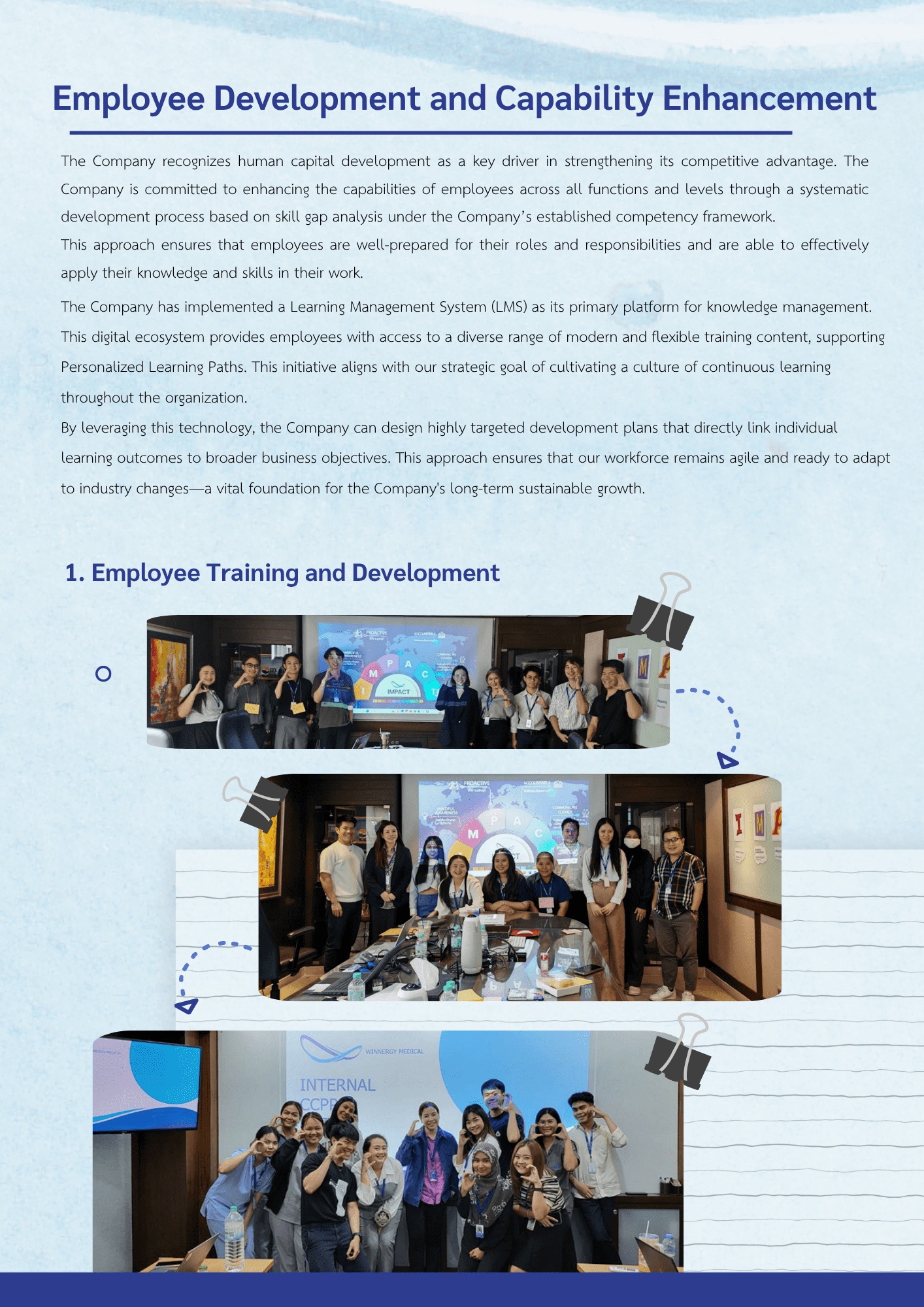
The Company recognizes that human capital is a key driving force behind the organization’s competitiveness and sustainable growth. In the context of a rapidly changing business environment, equipping employees with the ability to adapt, develop, and continuously enhance their skills is therefore a crucial strategy for maintaining the Company’s long-term organizational capability.
The Company also places importance on enhancing the Employee Experience in order to foster engagement, pride, and a sense of belonging in the organization’s shared success. This approach contributes to the retention of talented employees and supports sustainable growth together with the Company.
Promoting a Well-being Workplace
The Company implements its human resource policy with the aim of creating a safe working environment that promotes employee well-being and supports the holistic development of employees’ potential. The key approaches are as follows:
Occupational Health and Safety
The Company establishes occupational health and safety measures in compliance with applicable legal requirements. In addition, the Company promotes health-related initiatives, such as annual health check-ups and wellness campaigns, to enhance employees’ quality of life in the long term.
Capacity Development and Continuous Learning
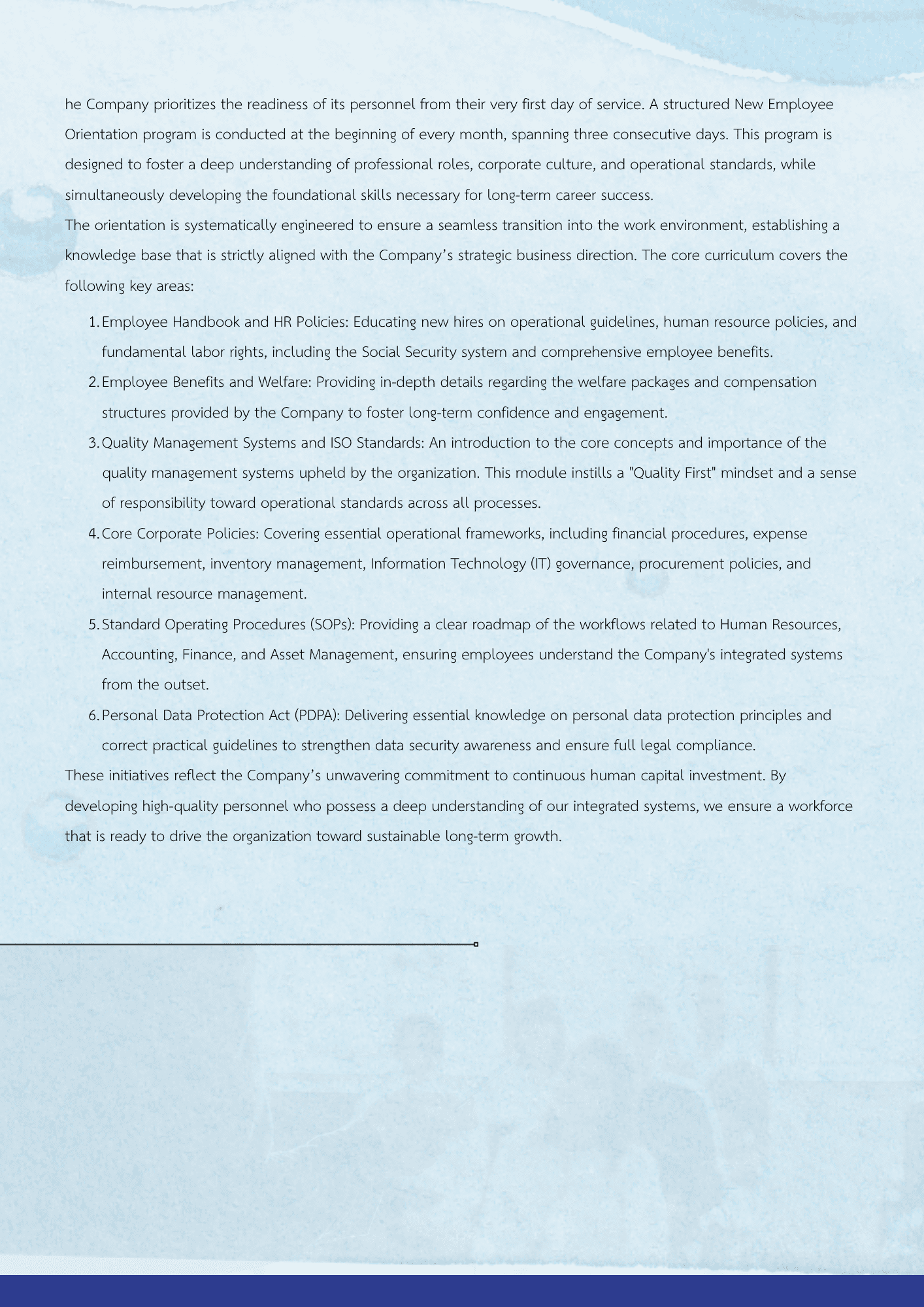
The Company supports the development of skills essential for business operations through training programs, upskilling, and reskilling initiatives. These efforts are carried out alongside the promotion of a lifelong learning culture by supporting both internal training courses and online learning platforms, in order to prepare employees for future changes.
Work–Life Balance
The Company promotes flexible working approaches and appropriate time management to support a healthy balance between work responsibilities and personal life. The Company also provides leave entitlements in accordance with legal requirements and employee-focused benefits, such as maternity leave, ordination leave, training leave, birthday leave, annual leave, and sick leave.
Fair Compensation and Benefits
The Company implements a compensation policy based on fairness and competitiveness in the labor market, together with appropriate employee benefits. These include health insurance, a provident fund, and a performance-based bonus system, aimed at motivating employees and enhancing their financial security.
Employee Engagement and Internal Communication
The Company provides channels for employees to share their opinions and suggestions through internal online platforms in order to improve working practices and foster a transparent organizational culture. The Company emphasizes two-way communication and continuously encourages employees’ feedback. The Company is committed to implementing these policies in a concrete manner, while regularly monitoring and evaluating their effectiveness to ensure alignment with the evolving business environment and employees’ expectations over time. These efforts serve as an important foundation for building a strong, resilient, and sustainably growing organization in the long term.
Plan Areas
| Plan Area |
|---|
| Fair employee compensation |
| Employee training and development |
| Promoting employee relations and participation |
| Occupational health and safety in workplace |
Employees — Workforce
Workforce Data
| Metric | Current Year | Previous Year | Two Years Ago |
|---|---|---|---|
| Total number of employees (Persons) | 215 | 185 | 169 |
| Number of male employees (Persons) | 82 | 65 | 55 |
| Number of female employees (Persons) | 133 | 120 | 114 |
| Total employment of disabled persons (people) | 2 | 2 | 2 |
| Total disabled employees (people) | |||
| Total male disabled employees (people) | |||
| Total female disabled employees (people) | |||
| Total disabled workers who are non-employee (people) | |||
| Contributions to the fund for promoting and improving the quality of life for disabled persons | |||
| Total number of male employees in operational level (Persons) | |||
| Total number of male employees in management level (Persons) | |||
| Total number of male employees in executive level (Persons) | |||
| Total number of female employees in operational level (Persons) | |||
| Total number of female employees in management level (Persons) | |||
| Total number of female employees in executive level (Persons) |
Employees — Remuneration & Provident Fund
Remuneration & Provident Fund
| Metric | Current Year | Previous Year | Two Years Ago |
|---|---|---|---|
| Total disabled employees (people) | 115,800,000 | 122,700,000 | 76,347,504.82 |
| Total male employee remuneration (Baht) | |||
| Total female employee remuneration (Baht) | |||
| Number of employees eligible to participate in PVD (persons) | 215 | 183 | 0 |
| Total number of employees joining employee provident fund (Persons) | 11 | 21 | 0 |
| Percentage of total number of employees joining employee provident fund to total number of employees (%) | 5.12 | 11.35 | 0 |
| Number of PVD members / Total eligible employees (%) | 5.12 | 11.48 | 0 |
| Total amount of provident fund contributed by the Company (Baht) | |||
| Total amount of provident fund contributed by employee (baht) |
Employees — Training & Development
Training Data
| Metric | Current Year | Previous Year | Two Years Ago |
|---|---|---|---|
| Average employee training hours (Hours / Person / Year) | 7 | 7 | 7 |
| Employee development and training expenses (baht) | 2,548,798.49 | 5,346,421.79 | 1,425,776.34 |
Employees — Occupational Health & Safety
Occupational Health & Safety Data
| Metric | Current Year | Previous Year | Two Years Ago |
|---|---|---|---|
| Total number of lost time injury incidents by employees (Cases) | 0 | 0 | 0 |
Employees — Labour Relations
Labour Relations — Introduction
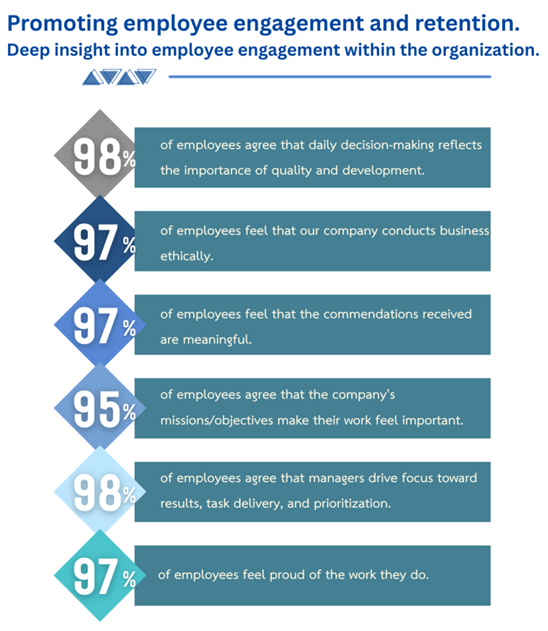
Labour Relations Data
| Metric | Current Year | Previous Year | Two Years Ago |
|---|---|---|---|
| Total voluntary resignations (Persons) | |||
| Male employees who voluntary resigned (Persons) | |||
| Female employees who voluntary resigned (Persons) | |||
| Percentage of employee turnover leaving the Company voluntarily (%) | 30 | 10 | 4.8 |
| Evaluation result of employee engagement | 1 | 1 | 1 |
Employees — Employee Representation
Employees Are Represented Collectively
No
Employees — Targets
Has Set Employee Targets
No
Employees — Performance & Outcomes
Has Performance Results
Yes
Performance Description
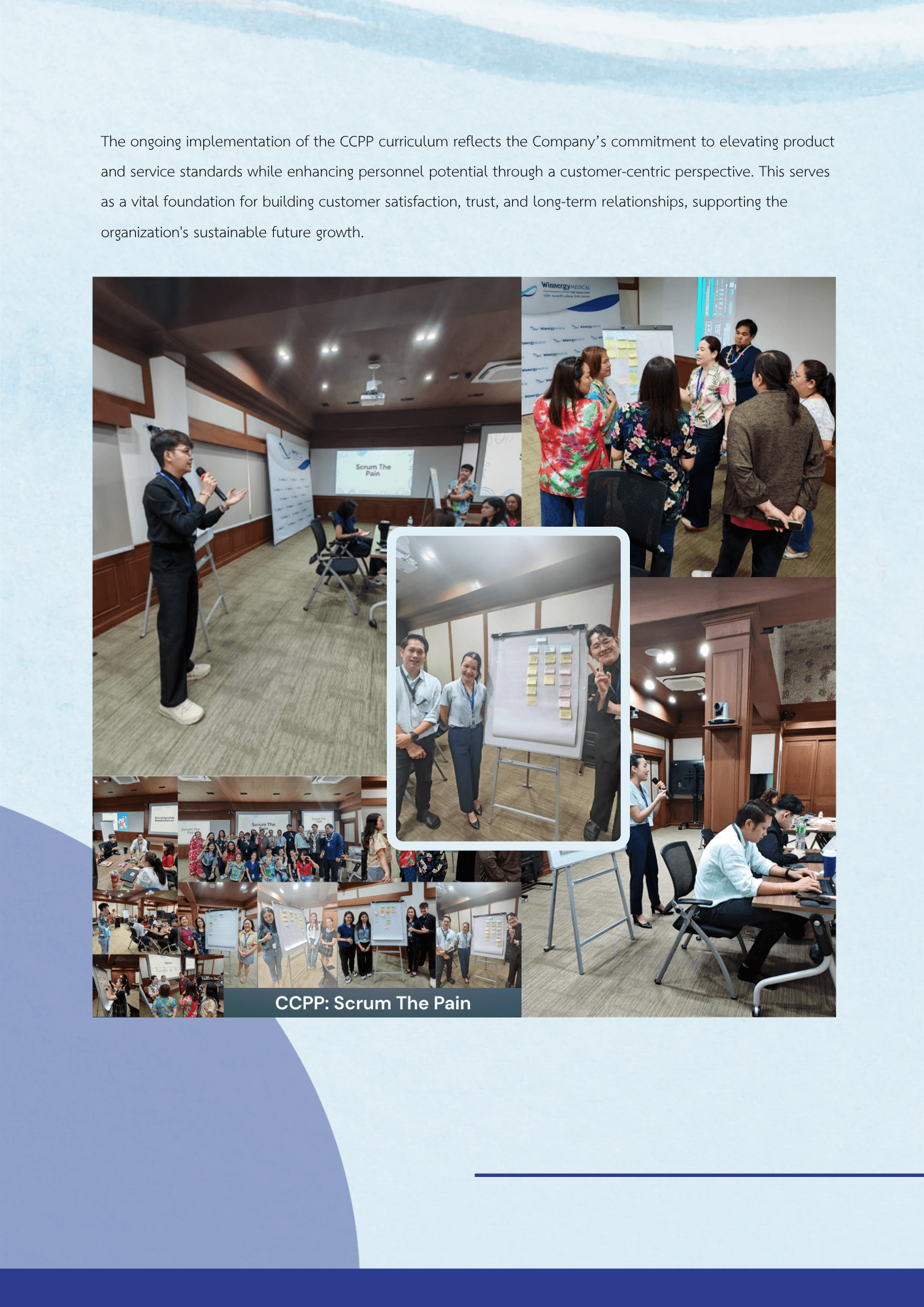
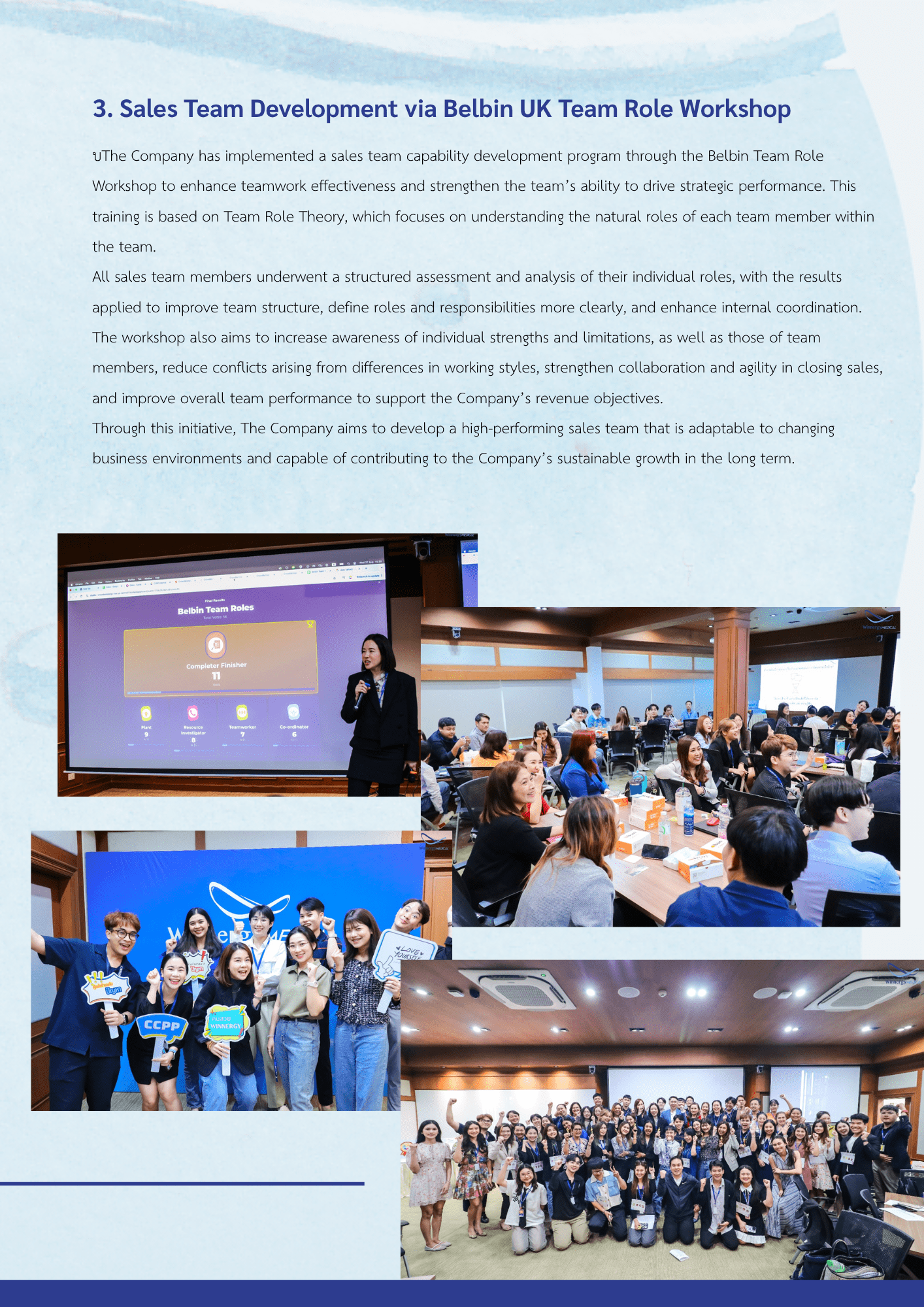
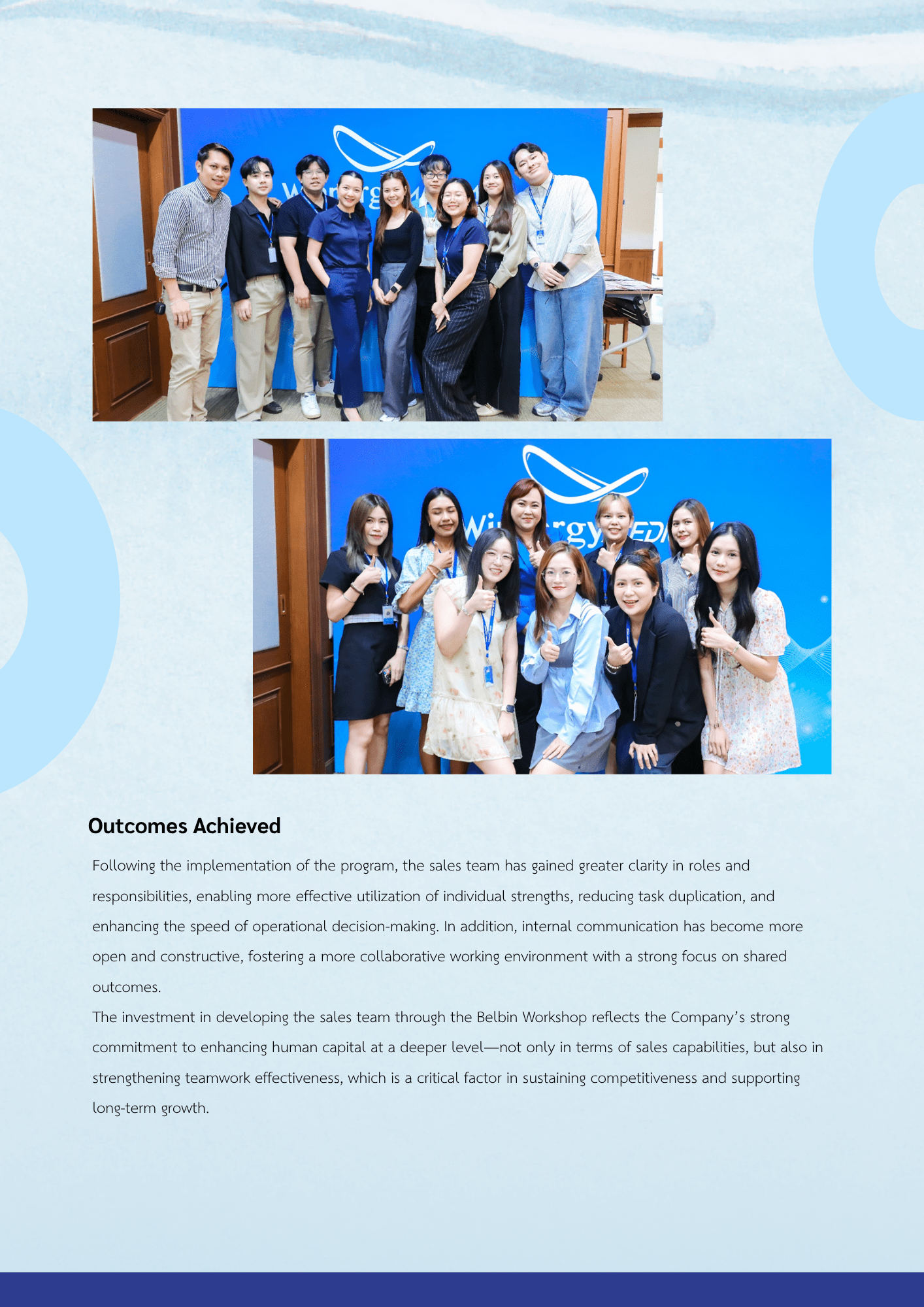
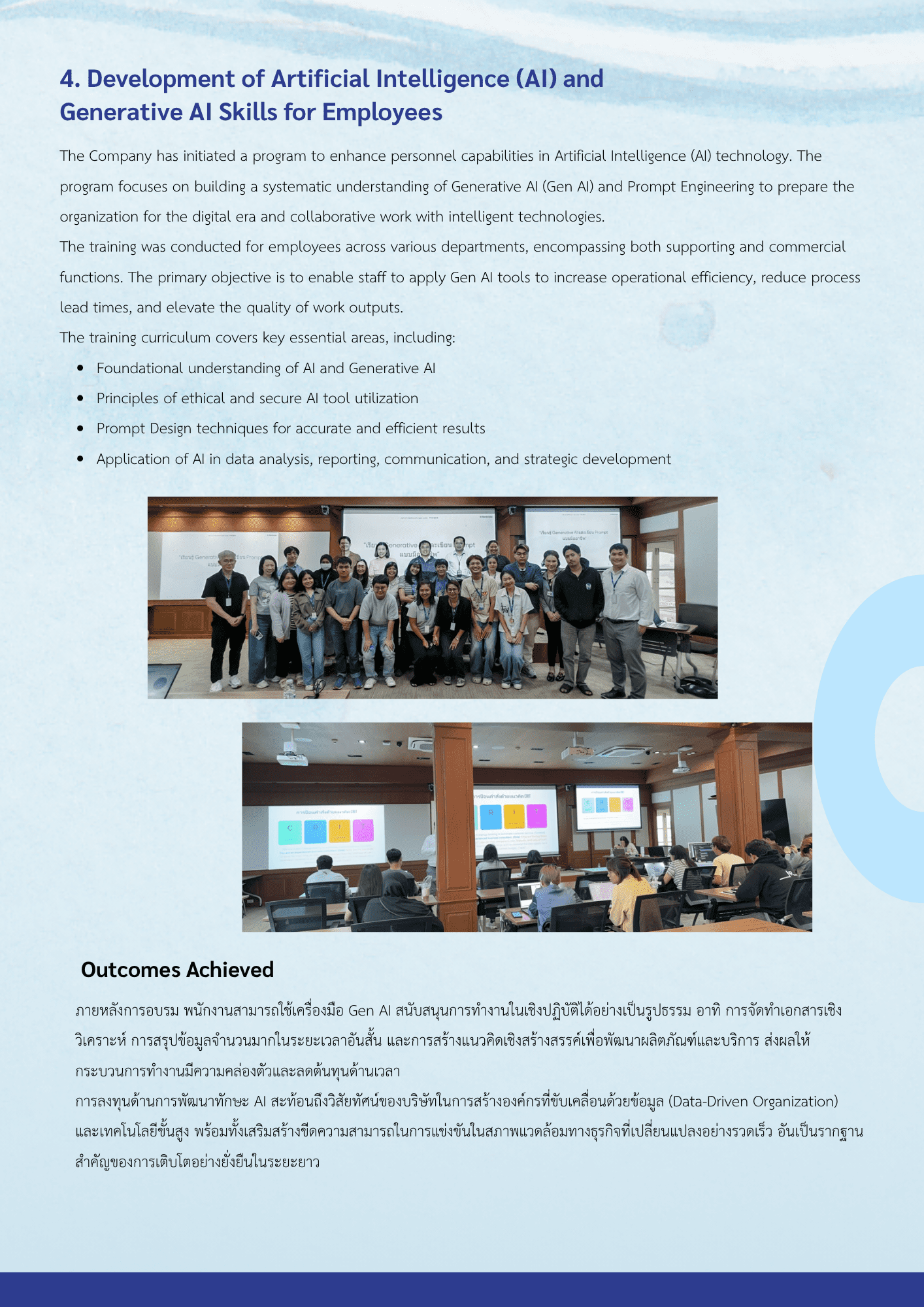
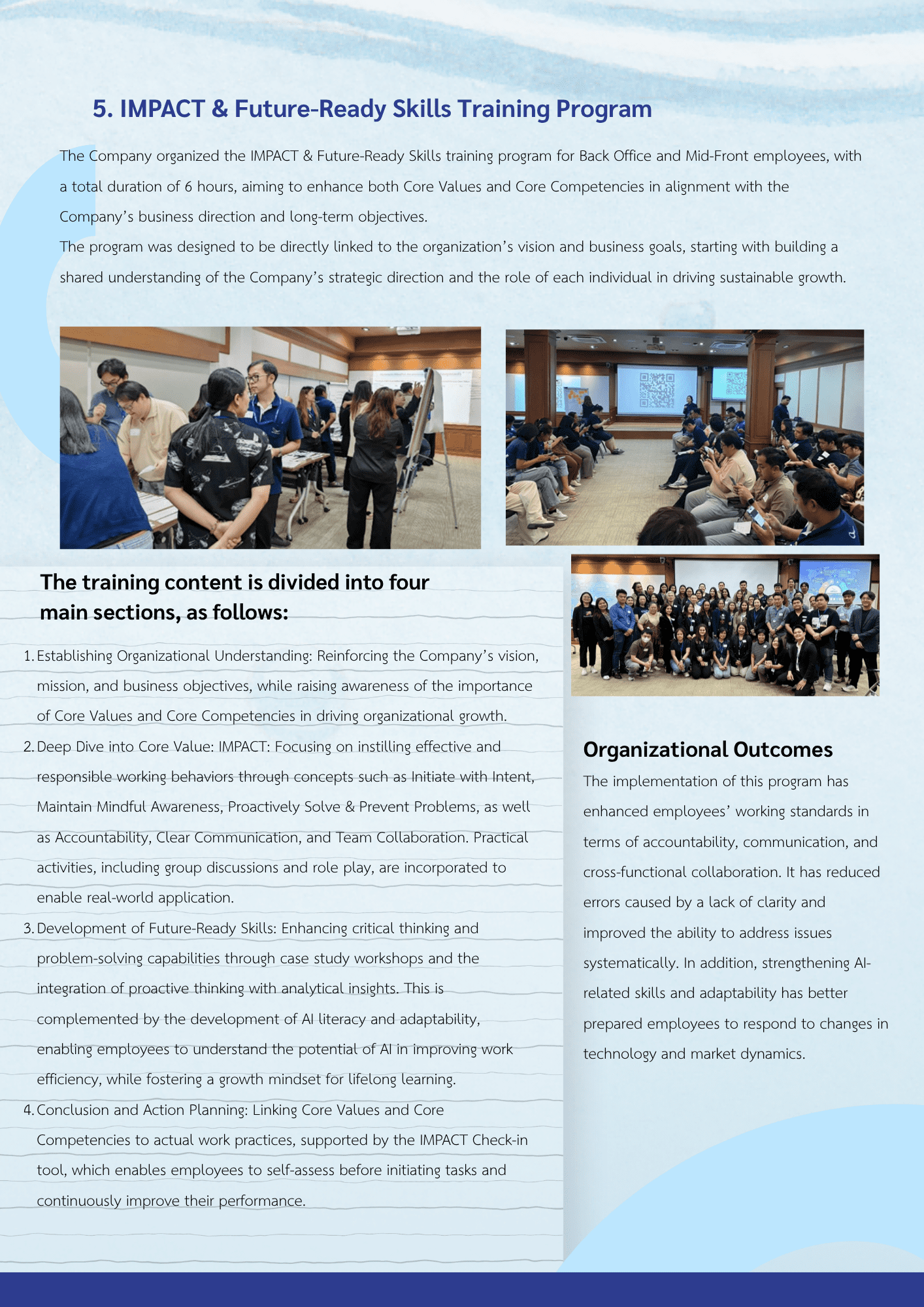
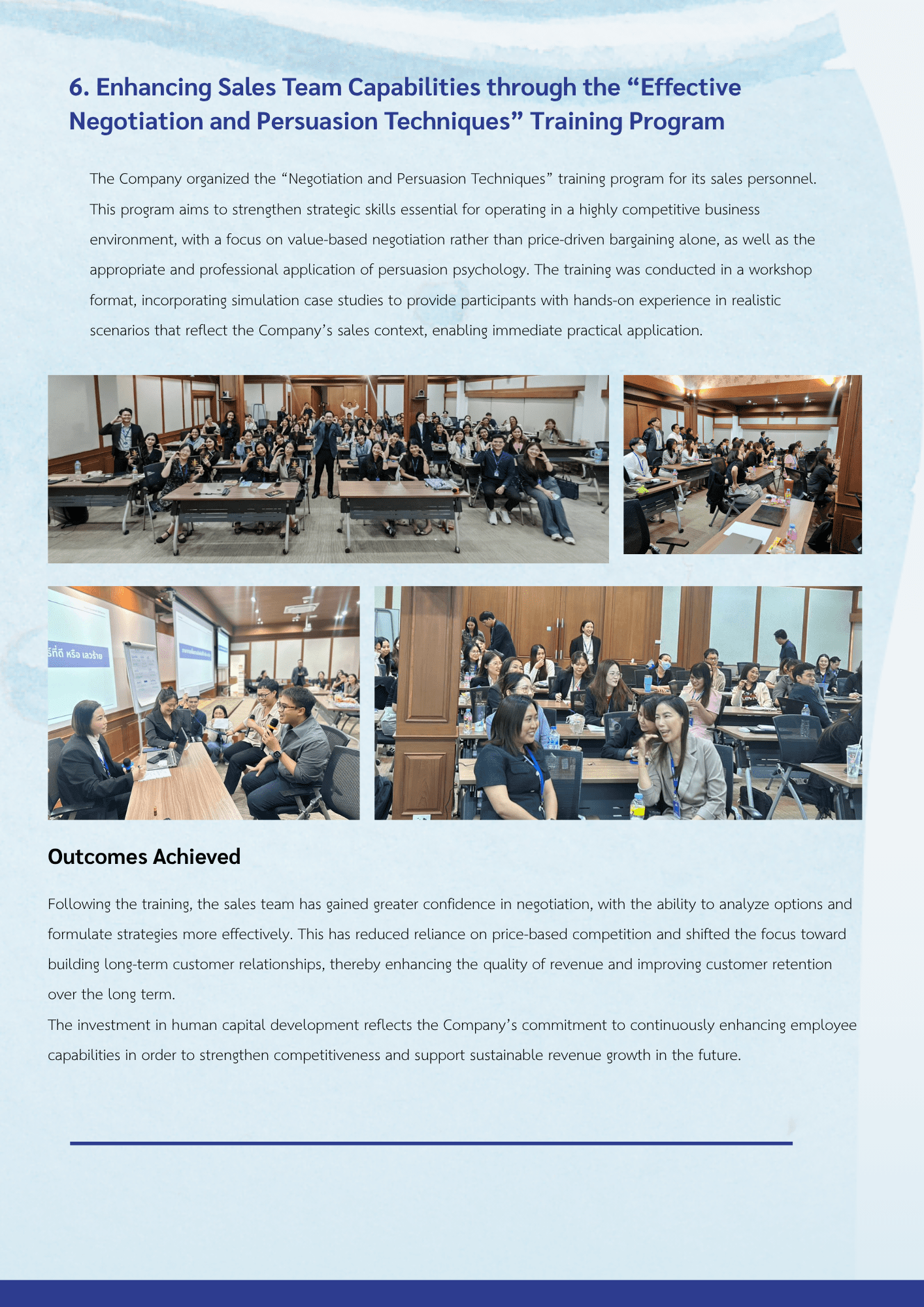
Customers — Plan & Guidelines
Has a Customer Management Plan
Yes
Plan Description
The Company is committed to achieving the highest level of customer satisfaction by emphasizing the quality, safety, and international standards of its products and services. The Company also ensures that advertising and promotional activities are conducted transparently and without misleading information. Necessary information is clearly and fully disclosed, including the manufacturer’s name, instructions for use, expiration date, and precautions.
Plan Areas
| Plan Area |
|---|
| Development of customer satisfaction and customer relationship |
| Protection of customer personal information |
Customers — Satisfaction Results
Customer Satisfaction Results
| Metric | Current Year | Previous Year | Two Years Ago |
|---|---|---|---|
| Evaluation results of customer satisfaction | 1 | 1 | 1 |
Customers — Targets
Has Set Customer Targets
Yes
Targets
| Indicator | Target Areas | Target Year | Target Year — Description |
|---|---|---|---|
| Customer Critical Pain Points (CCPP) | 3009 · Description: Development of customer satisfaction and customer relationship | 2,026 | Develop and enhance service processes by utilizing insights derived from the CCPP system in order to better address customer needs more precisely. |
Customers — Performance & Outcomes
Has Performance Results
Yes
Performance Description
Customer Satisfaction Survey Results
2024 (Base Year) | 2025 (Comparative Year) | |
Customer Satisfaction Survey Score (%) | 98 | 98 |
Performance on customer responsibility
Consideration of customer convenience, safety, and confidentiality.
After-Sales Services
The company provides knowledge, guidance, and training on product usage to customers who purchase its products. A team of specialists for each product is available to provide information and usage recommendations. Additionally, after-sales support is provided by a team of service engineers, including product warranty and maintenance in case of issues after purchase. Furthermore, the company has a sales coordination team ready to assist customers both before and after sales, acting as a bridge to ensure continuous confidence in the company’s products and services.
Product sales and reservations through multiple electronic channels.
The company offers multiple electronic sales channels, enabling consumers and interested individuals to easily, conveniently, and quickly access its medical and consumer products. These channels include Shopee, Lazada, Line My Shop, and the A New Day website.
Providing knowledge to customers, service recipients, and the general public on health care and disease prevention.
The company provides various channels for educating customers, service recipients, and the general public on health care and disease prevention. This includes inviting medical experts for interviews and sharing health-related articles through Knowledge Sharing on various online platforms such as Instagram, TikTok, YouTube, Facebook, and the company’s and its subsidiaries' websites.
Community & Social — Plan & Guidelines
Has a Community & Social Plan
Yes
Plan Description
In 2025, the Company placed importance on strengthening employees’ quality of working life while promoting sustainable social opportunities through human resource policies and corporate social responsibility initiatives that also support vulnerable groups.
The Company provides a financial assistance scheme for employees who have completed at least three years of service. Upon termination of employment, eligible employees are entitled to benefits in accordance with the Company’s criteria. This program serves as a basic financial security to support employees’ livelihood and facilitate their transition to the next stage of their careers or retirement.
At the same time, the Company has continuously employed persons with disabilities since 2023 in accordance with the proportion required by law. Currently, the Company employs two persons with disabilities who receive equal rights, benefits, and employment opportunities comparable to those of other employees. This reflects the Company’s commitment to creating an inclusive workplace that consistently upholds the principles of equality.
Plan Areas
| Plan Area |
|---|
| Education |
| Disadvantaged and vulnerable groups |
Community & Social — Targets
Has Set Community & Social Targets
No
Community & Social — Performance & Outcomes
Has Performance Results
Yes
Performance Description
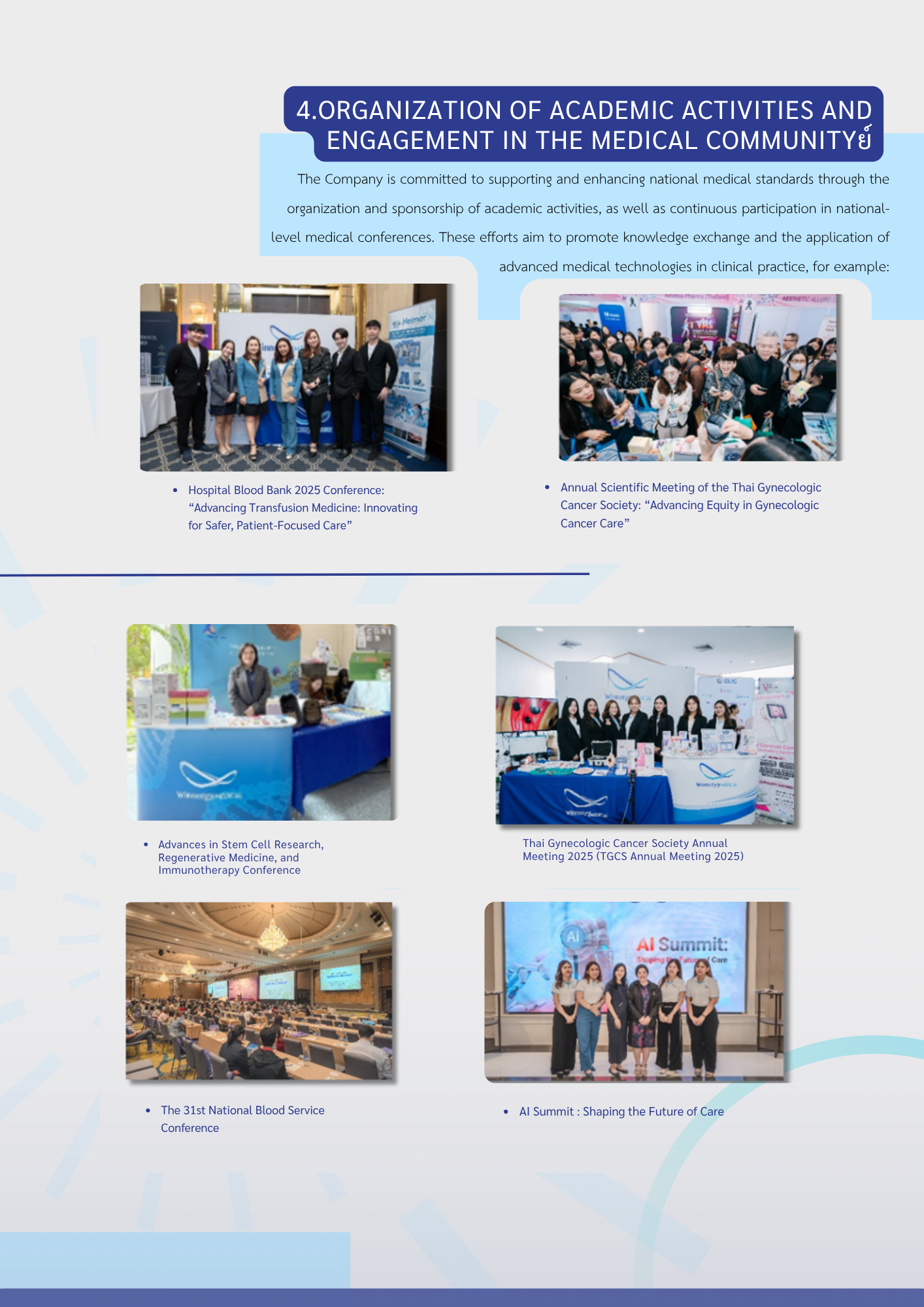
The Company recognizes the importance of social responsibility and actively participates in community and social development. The Company supports various public activities that contribute to society, enhance the quality of life of people in communities, and promote long-term self-reliance, thereby improving overall social well-being. The Company also continuously encourages volunteer activities related to community and social development and fosters a sense of responsibility toward communities, society, and the environment among employees at all levels.
Performance in Community and Social Development
The Company organizes social responsibility activities and participates in community and social development as follows:
Law Violation Incidents
Law Violation Incidents
| Metric | Current Year | Previous Year | Two Years Ago |
|---|---|---|---|
| The total number of cases or incidents of significant violations of laws or regulations regarding social and human rights (Cases) | 0 | 0 | 0 |
| The total number of cases or incidents that cause significant labor disputes (Cases) | 0 | 0 | 0 |
| The total number of cases or complaints related to consumer rights violations (Cases) | 0 | 0 | 0 |
| The total number of cases or complaints related to partner rights violations (Cases) | 0 | 0 | 0 |
| The total number of cases or incidents that cause disputes with the community/society (Cases) | 0 | 0 | 0 |
| The total number of cases or incidents related to cyber security or customer data breaches (Cases) | 0 | 0 | 0 |
| The total number of cases or incidents related to safety and occupational health at work (Cases) | 0 | 0 | 0 |